Buyer Guides
How Psyllium Husk Is Manufactured: 7-Stage Processing from Seed to Export-Ready Product
TL;DR. Modern psyllium husk manufacturing runs through seven precision stages: raw seed reception, multi-step seed cleaning, controlled-impact de-husking, winnowing and husk separation, powdering and blending, heat sterilisation and fumigation, and final QC grading. No chemicals are used at any step. The same facility produces five purity grades (85, 90, 95, 98, 99%) plus two animal-feed by-products (Lali and Golaisab). This guide is what a US-FDA or EU-FIC qualified buyer should expect from their supplier’s processing chain, with the equipment, capacities, and compliance controls that separate pharma-grade production from commodity bulk.
OvataFiber is the exporter; manufacturing is carried out at our certified GMP partner facility in Gujarat, India. The process flow described below reflects what runs on that line, with capacities, equipment types and QC controls referenced from a peer-reviewed processing-unit study and verified against the partner’s standard operating procedures. Buyers reviewing this can map each step against US-FDA cGMP for dietary supplements (21 CFR Part 111), EU-FIC food-information requirements, and USP <785> swell-volume methodology.
Why processing matters for the formulator
Two lots of psyllium husk from two different mills can carry identical purity-grade labels and behave nothing alike in your formulation. The difference shows up in capsule fill density, beverage mouthfeel, tablet hardness, swell volume reproducibility, and microbial test failures at port. All of those downstream outcomes are decided in the processing chain — not in the field, not in the marketing copy. This article walks through that chain so a procurement or QA buyer can ask the right questions before issuing a first PO.
Stage 1 — Raw seed reception and pre-cleaning
Raw Plantago ovata seed arrives at the facility from contracted farms across the Gujarat–Rajasthan psyllium belt. Harvest runs March to April; reception continues for two to three months as farms truck in their lots. Each consignment is weighed at a calibrated weighbridge, sampled for moisture and visual quality, and recorded against a lot ID that travels with the material through every subsequent stage. Traceability starts at this weighbridge.
From the reception deck, seed enters a multi-step mechanical pre-cleaning line. Vibrating sieves remove undersized contaminants — soil, dust, broken weed seed — and oversized debris like straw, twig and small stone. Air-aspiration channels lift away light material (chaff, hulls, dust) that gravity-based sieves miss. A dedicated de-stoner uses a tilted, vibrating, air-fluidised deck to separate stones from seed of the same size but different specific gravity. Throughput at this stage is typically 500 kg seed per hour. No solvents, no wash water, no chemical treatments are introduced — pre-cleaning is entirely mechanical.
For a pharma-grade buyer, the points to verify here are: a documented lot-ID system on first receipt, dust extraction connected to the reception line (worker safety + product integrity), and a sampling SOP that takes representative samples before reception is closed out.
Stage 2 — 10-stage seed cleaning
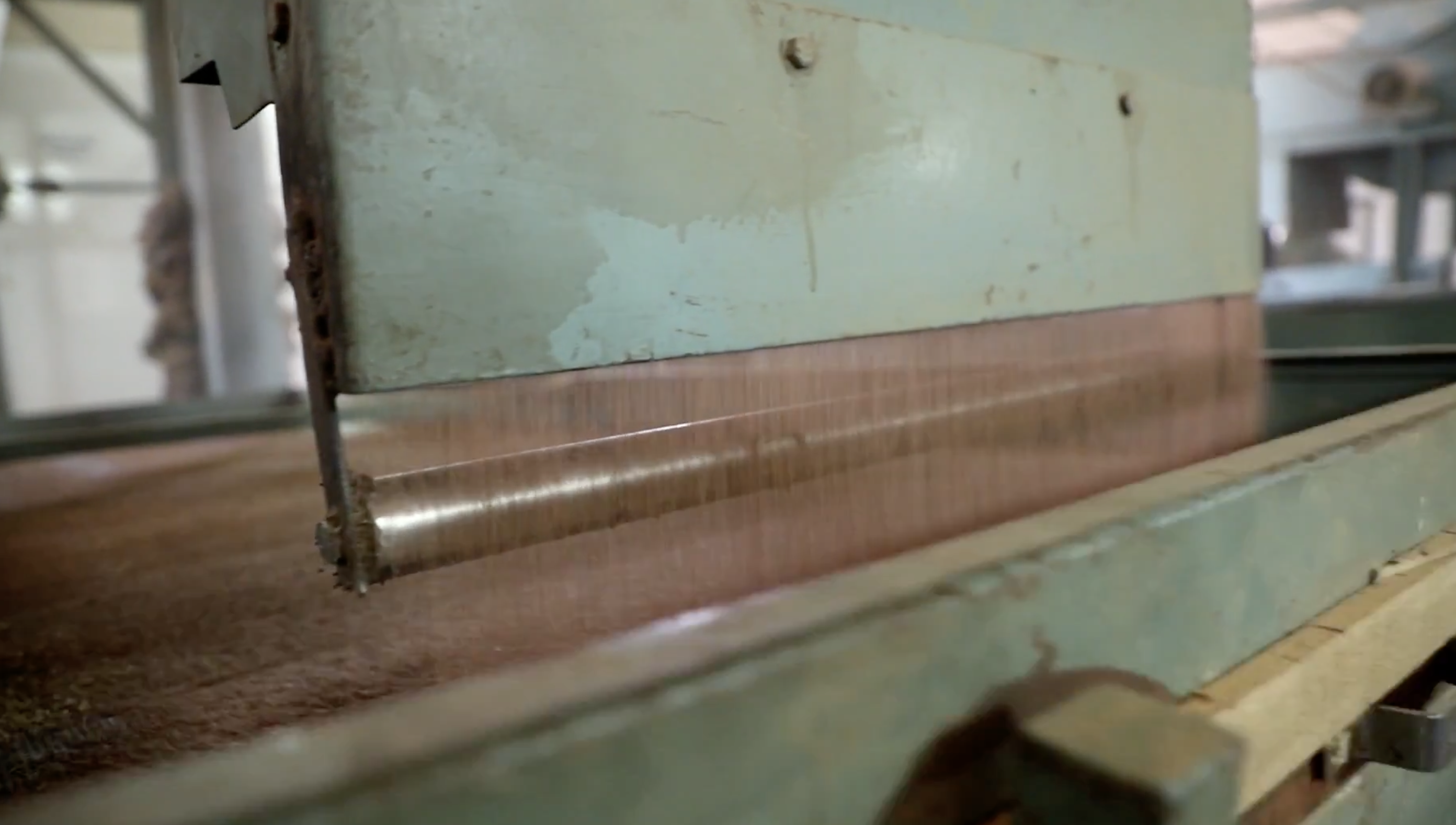
Pre-cleaned seed enters a more rigorous 10-step cleaning sequence designed to deliver pharmaceutical-grade input to the de-husking line. The sequence layers complementary separation principles so no single failure mode can pass through:
- Magnetic separation — high-strength magnets at multiple chute transitions pull ferrous-metal particles from the stream (typical source: worn equipment parts, transport contamination).
- De-stoning — gravity-based separation of similarly-sized stones from seed.
- Gravity separation — same physical size, different density: this stage separates well-filled mature seed from light or partially-empty seed.
- Optical colour sortex — high-resolution cameras inspect every seed for colour deviation; air ejectors reject discoloured, mouldy, immature or damaged seed in milliseconds.
- Combined with classifier sieves and aspirators throughout, this 10-step train ensures zero foreign material reaches the grinding stage.
Throughput at this cleaning line is typically 1,000 kg seed per hour. Optical sortex is the most expensive single piece of equipment in a modern psyllium plant and is the strongest single signal of pharma-grade processing intent — its absence is a red flag for any buyer specifying 98 or 99% purity.
Stage 3 — Grinding and de-husking
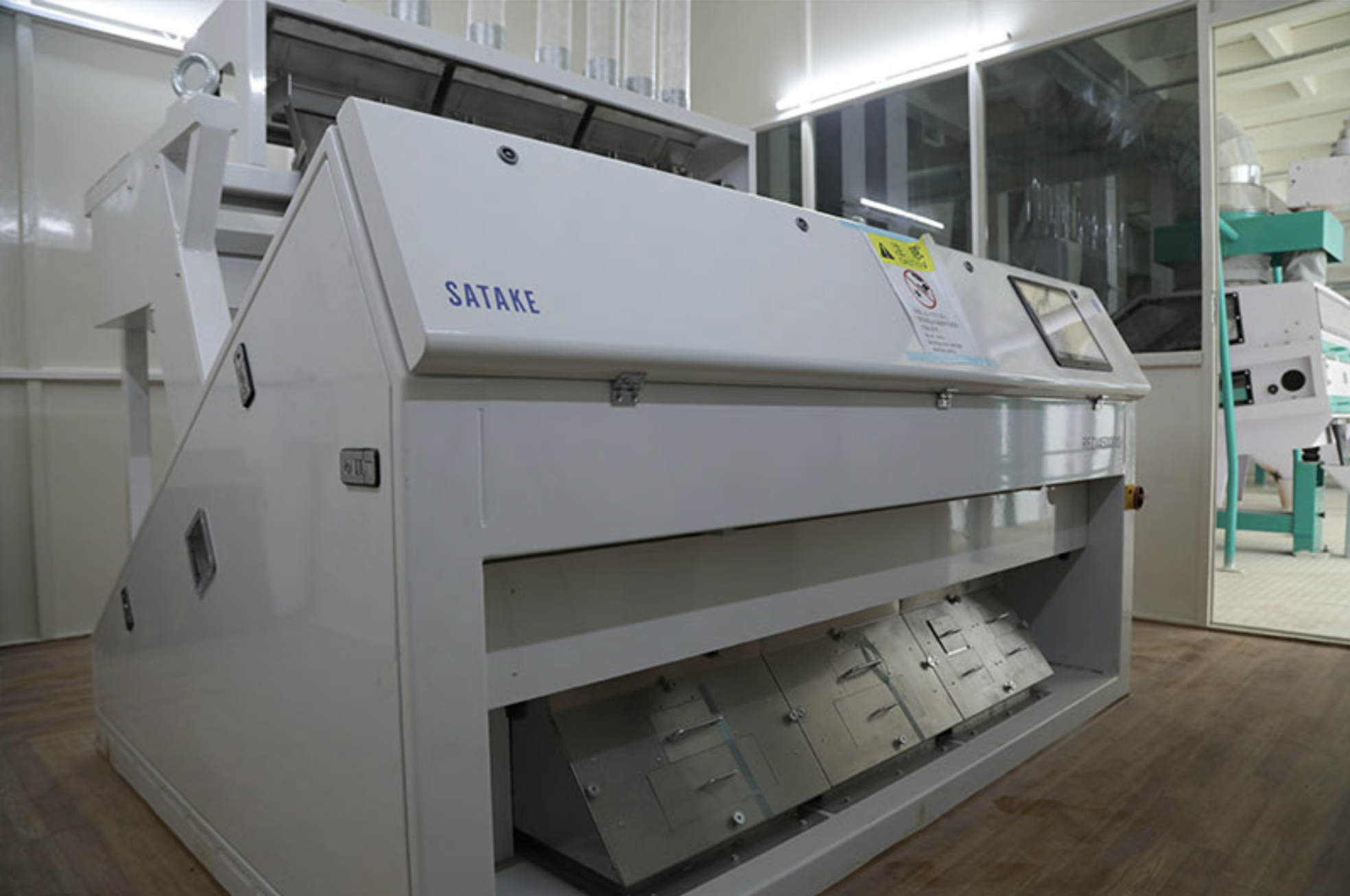
Cleaned seed enters the de-husking unit. The mill room is built around an array of around 72 grinders of 36-inch diameter, arranged in parallel with automatic feeding. Husk is separated from the seed kernel by controlled impact — a precisely tuned mechanical action that fractures the outer mucilage-rich seed coat (the husk) without crushing the protein-rich endosperm beneath. Get the impact wrong and you contaminate the husk with endosperm fragments, dropping purity by several percentage points; get it right and you produce first-mill husk at 98–99% purity.
Throughput at de-husking is around 200 kg of de-husked material per hour. The reduction from 1,000 kg/hour (cleaning) to 200 kg/hour (de-husking) reflects the mass split: roughly 20–25% of seed mass becomes husk; the rest becomes endosperm and bran fractions used in animal feed (see Lali and Golaisab below). Strategically placed inline magnets capture any ferrous particles released by mill wear before they enter the husk stream.
Stage 4 — Winnowing and husk cleaning
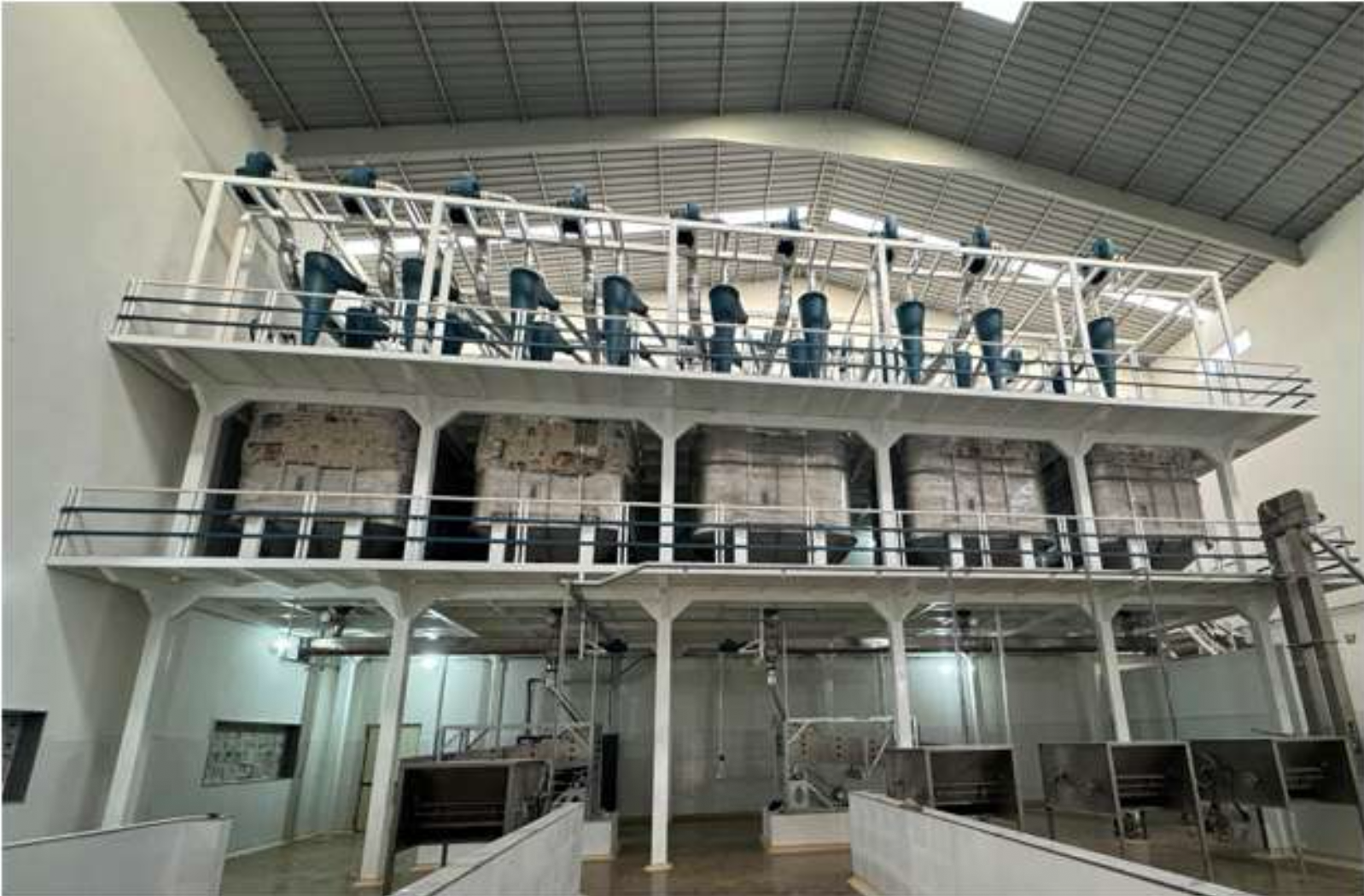
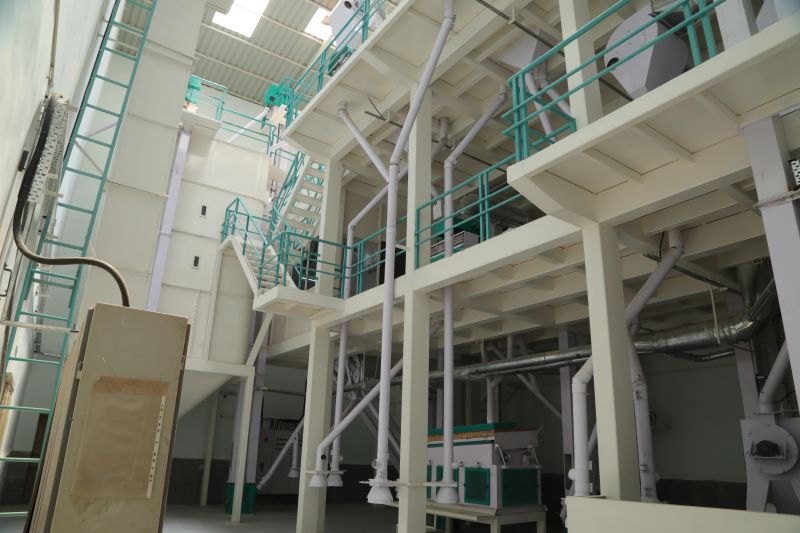
After grinding, the husk + kernel mixture enters the winnowing section. Medium-pressure fan systems with engineered ducting carry the light husk fraction upward while the denser endosperm and broken-seed fractions drop down for collection. Vertical transport between floors uses bucket elevators; horizontal transport uses worm conveyors — both fully enclosed so no dust escapes to the room and no airborne contaminant re-enters the product.
The separated husk passes through additional gravity separators that progressively remove residual fines and endosperm flecks. This is where the final purity grade is determined: 85%, 90%, 95%, 98% or 99%. Higher grades require more cleaning passes and accept lower yield; lower grades short-circuit the cleaning train and trade purity for volume. A facility cannot freely “upgrade” a low-purity lot post-hoc — purity is fixed by the number and aggressiveness of cleaning passes the husk has been through.
Stage 5 — Powdering and blending
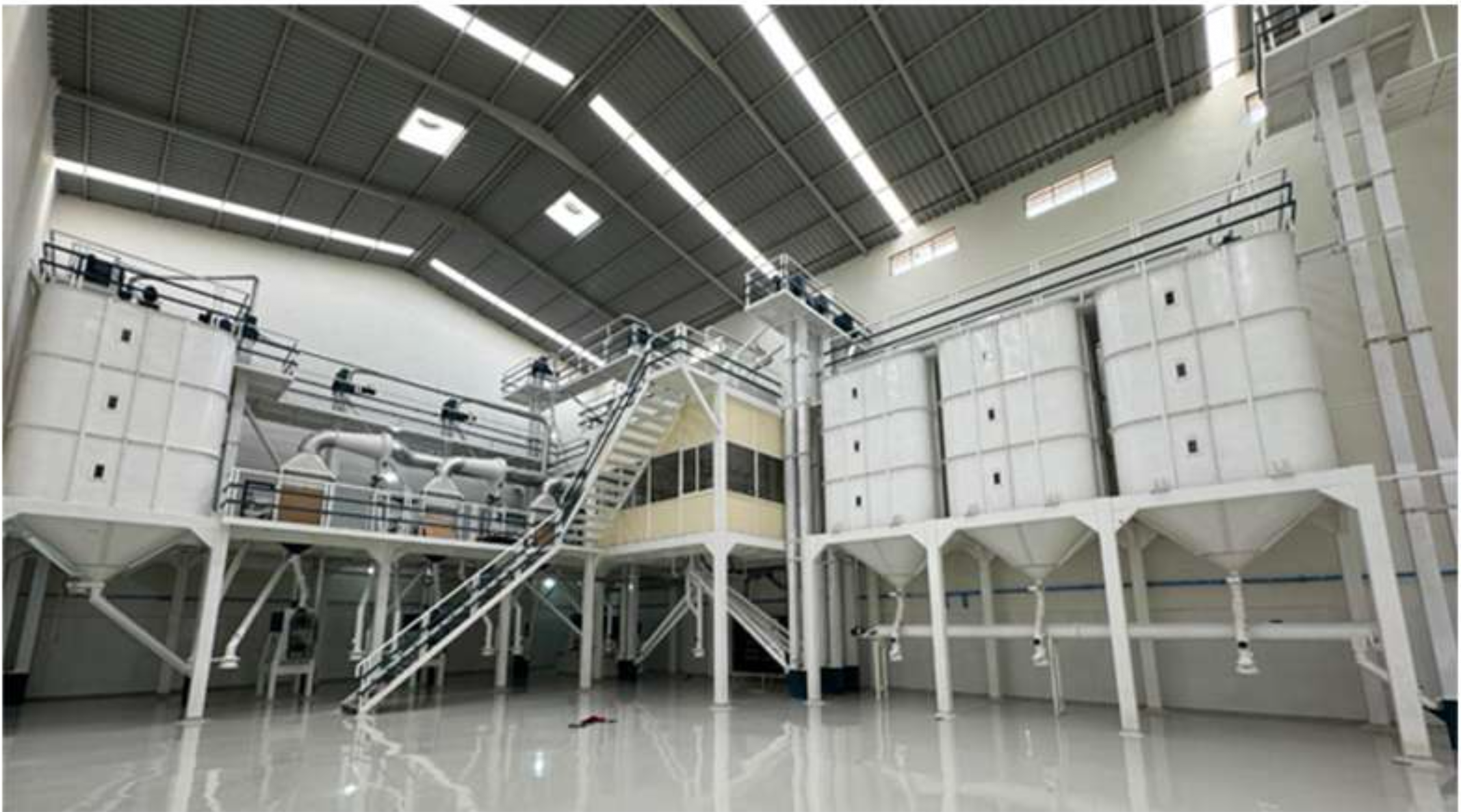
For customers who buy powder rather than flake-form husk, the graded husk passes through industrial powdering machines with heavy-duty blades. Particle size is controlled to standard mesh ranges — 60, 80, 100, 200 mesh — selected by the downstream application. Capsule fill prefers 60–80 mesh for flow rate; tablet binding standardises on 100 mesh; orodispersible and beverage formulations require ultra-fine 200 mesh.
The blending section houses large industrial blenders that homogenise husk and powder fractions in precise ratios per customer specification. Custom blends are where this stage earns its keep: a brand may require 95% purity husk blended with a small fraction of inulin or a flavour pre-mix; another may require a uniform 50/50 blend of two mesh grades for a specific dissolution profile. The blender’s mixing time and rotation profile are documented per blend SKU so any future repeat order can be reproduced lot-for-lot.
Stage 6 — Sterilisation and fumigation
Heat sterilisation is applied to eliminate microbial load — most importantly Total Aerobic Plate Count, Yeast & Mould, E. coli, Salmonella, and Staphylococcus aureus. The process must reduce all of these to within the limits demanded by US-FDA and EU food-safety frameworks (typical ceilings: TPC < 10,000 CFU/g; Y&M < 1,000 CFU/g; E. coli / Salmonella absent in 25 g). Modern dry-powder sterilisers use a combination of steam injection and dry-heat hold steps controlled by closed-loop temperature/time logic, with full batch records exportable to PDF for the buyer’s QA file.
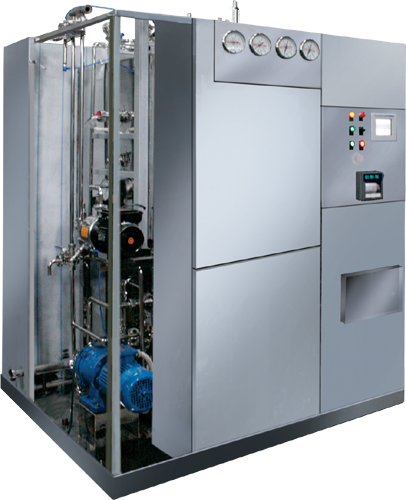
A dedicated fumigation chamber sits alongside. Dosage, time and active substance are selected per the importing country’s regulatory framework. For example: phosphine-based fumigation is widely accepted in US and EU contexts when residue is non-detect post-aeration; methyl bromide remains restricted in most modern destinations under the Montreal Protocol. The fumigation SOP is written against the importer’s regulatory baseline, not against the supplier’s convenience. Both raw seed (before processing) and finished product (before bagging) can be fumigated to spec.
Stage 7 — Quality testing and grading
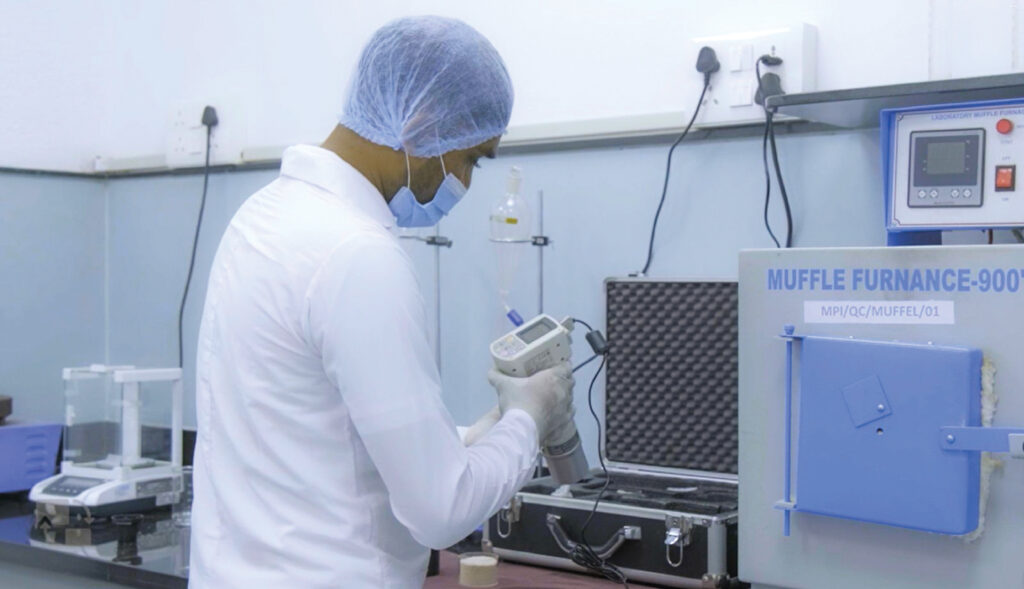
Every lot is held in quarantine until laboratory testing clears it for release. The standard panel includes:
- Identification — confirmation of species (Plantago ovata) and form (husk / powder / seed) against the lot’s COA.
- Loss on drying (LOD) — moisture and volatile-matter content; threshold for husk is typically ≤ 12%.
- Swell volume per gram — the USP <785> method: 1 g sample hydrated in 100 ml water for 24 h at 25 °C, gel volume measured in a graduated cylinder. ≥ 40 ml/g is the threshold for 99% pharma grade.
- Light extraneous matter — proportion of low-density non-husk material; the binding constraint for the 99% grade is ≤ 0.5%.
- Purity percentage — overall mucilage-rich husk content vs. inert.
- Particle size distribution — sieve analysis confirming mesh-size compliance.
- Heavy metals (ICP-MS), aflatoxins (HPLC), microbial (ISO 4833 / 16649 / 6579), and pesticide residues (LC-MS/MS & GC-MS/MS) for export-spec lots.
Five grades come out of the same processing line — 85% / 90% / 95% / 98% / 99% — differentiated by the cleaning intensity, swell volume, and light-extraneous-matter content. See our purity-grades guide for the full grade-by-grade table and which application takes which grade. 99% is the only grade that meets USP, EP, BP and IP pharmacopoeial requirements; 95%–98% are the supplement workhorses; 85%–90% are typically routed to bakery or animal feed.
US-FDA and EU compliance — what each stage maps to
| Stage | US-FDA / cGMP control | EU control |
|---|---|---|
| Reception & pre-cleaning | 21 CFR 111.70 (component identification & testing on receipt) | EU Regulation 178/2002 — Article 18 traceability one-step-back / one-step-forward |
| Cleaning & sortex | 21 CFR 111.155 (production & process controls) | EC 852/2004 — Annex II hygiene of foodstuffs |
| De-husking & winnowing | 21 CFR 111.100 (equipment maintenance, cleaning) | EC 852/2004 — equipment hygiene + dust extraction |
| Powdering & blending | 21 CFR 111.260 (batch production records) | EU 1169/2011 (FIC) — accurate labelling of blended composition |
| Sterilisation | 21 CFR 111.355 (treatment to reduce microbial contamination) | EC 2073/2005 — microbiological criteria for foodstuffs |
| Fumigation | EPA + FDA limits on residual fumigants in finished product | EU 396/2005 — maximum residue limits (MRLs) |
| QC & release | 21 CFR 111.420 (laboratory operations); USP <785> for swell volume | EU 178/2002 + EU MRL framework; EP psyllium monograph |
A buyer’s qualification questionnaire should ask, per stage: which SOP covers this, what is the documented frequency of verification, and can we have a sample batch record? Suppliers that can answer those three questions on every line are the suppliers that will pass a third-party audit cleanly.
By-products: Lali and Golaisab
The 75–80% of seed mass that doesn’t become husk is not waste. The de-husking process produces two distinct by-product streams:
- Lali — the coarser endosperm + bran fraction. Used as a high-fibre cattle feed concentrate and, in some markets, as a binder in pelleted ruminant diets.
- Golaisab — the finer mill-tail fraction. Used predominantly in pig and poultry feed for its soluble-fibre content; some animal-health supplement brands incorporate it into companion-animal digestive-support formulations.
For animal-health supplement formulators sourcing functional fibre, this is the differentiator: a single supplier can deliver husk for the consumer product AND Lali/Golaisab for the same brand’s animal-health line, with a unified COA and traceability chain. Talk to our export desk if you want to spec both streams on one PO.
Frequently asked questions
Are any chemicals used in psyllium husk processing?
No. The entire processing chain from seed reception through final grading is mechanical separation plus heat sterilisation. No solvents, no acid washes, no chemical bleaching. Fumigation is the only chemical input and only when the importing country’s regulations require it; the active substance, dose and aeration time are selected per the destination’s MRL framework.
How long does each lot stay in quarantine before release?
Typically 5–10 working days. Swell volume (the USP method) requires a 24-hour hydration hold by itself. Microbial counts add 3–5 days. Heavy-metal and pesticide-residue panels run in parallel. A lot ships only after the full COA is signed off and, for export, after NABL-accredited third-party verification confirms in-house results.
What’s the difference between first-mill and second-mill husk?
First-mill husk is the cleanest output from the de-husking line — typically 98–99% purity, the highest swell volume, and the highest market price. Second-mill husk is recovered from re-passing the kernel + residual-husk fraction through the mill: it has more endosperm contamination, lower swell volume, and is graded at 85–90%. Buyers specifying pharma or premium-supplement grades should specify first-mill on the PO.
Can the same facility produce both organic and conventional?
Yes, if the facility holds the relevant organic certification and operates segregated lines for organic batches. Standard practice in modern Indian psyllium plants is to run organic on dedicated mill heads with documented clean-down protocols before and after each organic run, plus segregated silo storage and batch IDs that travel with the material end-to-end. The organic Transaction Certificate ships with each organic export lot.
How do I verify my supplier’s process matches what they describe?
Three checks: ask for the equipment register with manufacturer names and capacities (e.g. “Satake optical sortex, model X, capacity 1,000 kg/h”); ask for a redacted batch record from a recent lot in the grade you intend to buy; and either visit the facility yourself or accept a recorded virtual walk-through covering reception → cleaning → de-husking → packing. Any supplier serious about long-term B2B export will accommodate all three.
Want to map this process to your formulation? Send us your specification — we will respond with the relevant SOP references, a sample COA, a redacted batch record, and a sample lot at the grade and mesh you intend to qualify.